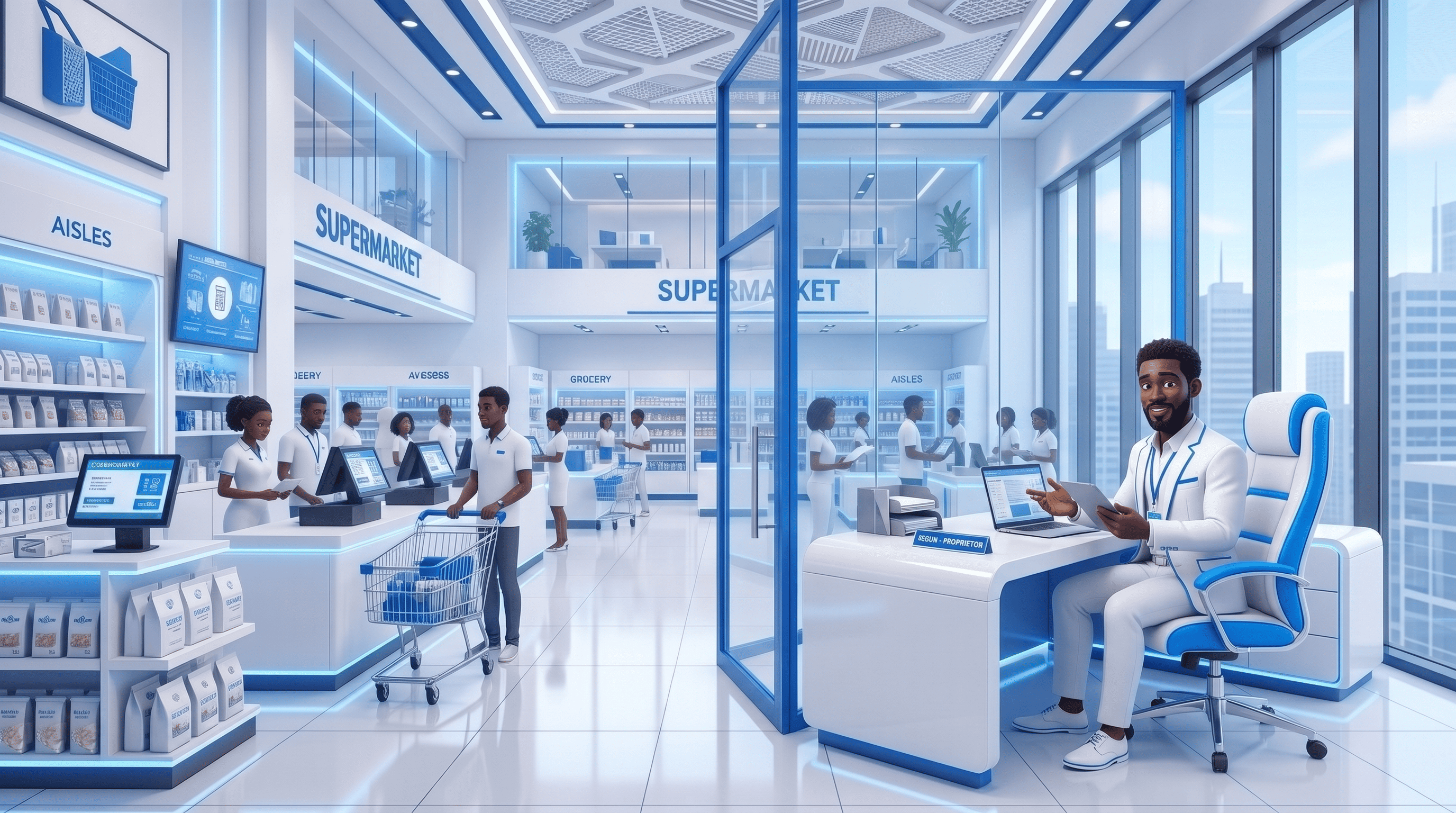

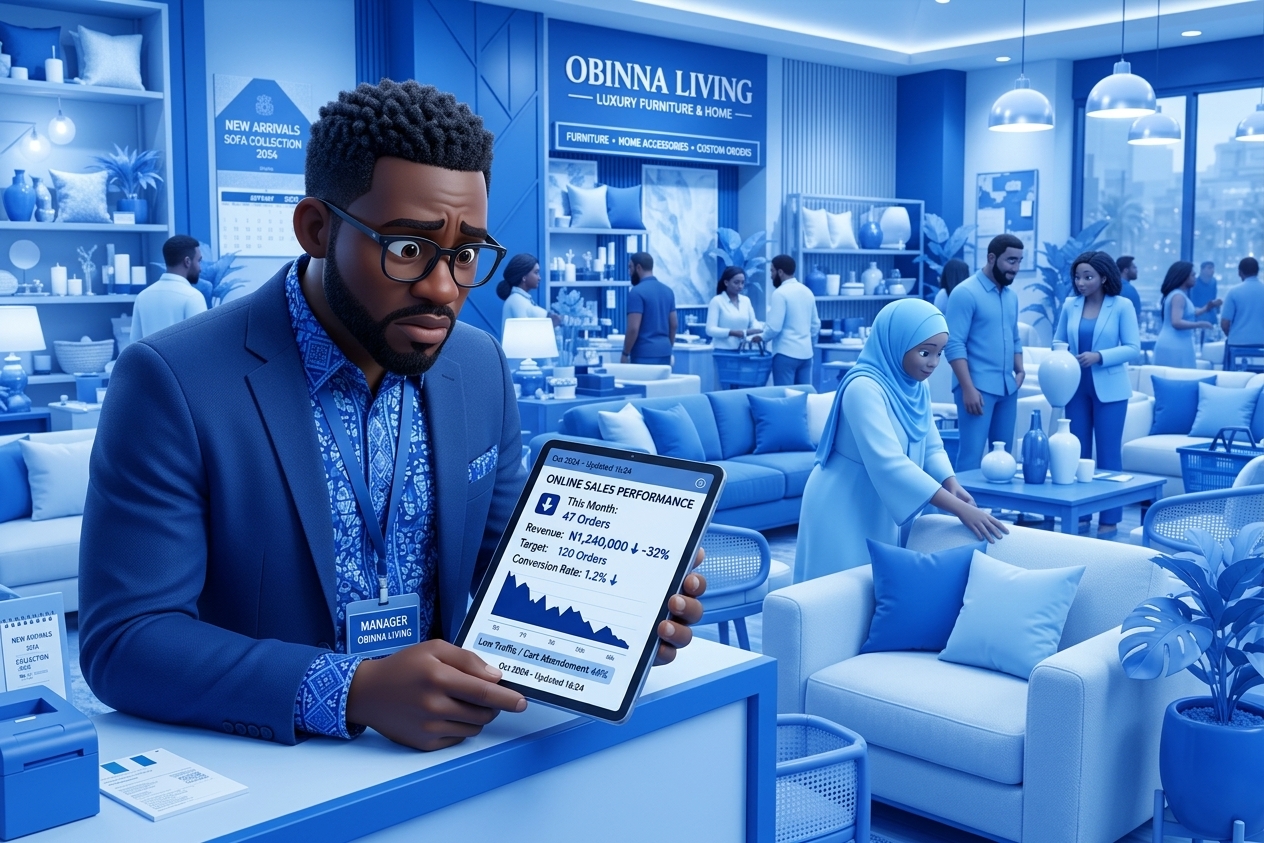
Your showroom is full of customers, but why does your online store look like nobody knows your business exists?
The Busy Showroom That Was Losing Customers
On a Saturday afternoon, Funke's furniture showroom in Victoria Island is buzzing.
Customers are walking between beautifully displayed sofas, dining sets and luxury home accessories. Sales representatives are answering questions, cashiers are processing payments, and delivery staff are preparing orders.
From the outside, everything looks successful.
But Funke has a problem.
A customer visits the showroom, spends an hour comparing sofas and eventually leaves without buying. Three days later, she decides she wants the same sofa.
She visits the company's website.
Unfortunately, the website does not show the latest stock availability. The showroom has already sold the last unit, but nobody has updated the online catalogue.
Another customer purchases a coffee machine in-store. Two weeks later, he needs compatible accessories, but the business has no organised digital record to help reconnect with him.
Meanwhile, the finance team spends hours reconciling card payments, bank transfers and cash sales from different branches.
Funke begins to realise something uncomfortable.
Her business has customers, products and physical locations. What it lacks is a connected system.
The showroom is working. The online business is not keeping up.
This is the challenge facing many established retailers: their physical and digital operations are growing separately when they should be working together.
The Retail Industry Is Changing, and Physical Stores Cannot Afford to Ignore It
This is not simply a technology problem. Developments across Nigeria's retail industry show why businesses need to rethink how physical shopping, digital payments and online commerce work together.
Four developments help explain the opportunity.
1. Nigeria's Retail Market Is Still Dominated by Physical and Neighbourhood Shopping
A BusinessDay report published on October 2, 2026, examined how Nigeria's fragmented retail market is forcing brands to rethink how they reach consumers.
Drawing on McKinsey's State of Consumer Africa 2026 research, the report noted that an estimated 90-95% of Nigeria's grocery retail remains in traditional trade.
It also highlighted how digital payments and technology are increasingly developing alongside traditional physical shopping.
Why does this matter to Funke?
Because the future of Nigerian retail is not necessarily about replacing physical stores with websites. It is about making existing retail locations work together with digital channels.
A customer may discover a product online, inspect it in a showroom and complete the purchase later from home. Retailers need systems that support that entire journey.
2. Retail Businesses Are Beginning to Treat Customer Receipts as Valuable Data
In May 2026, Shoppoint announced its Billion Receipts Initiative, a campaign aimed at digitising one billion offline consumer receipts.
The initiative is designed to improve visibility into consumer spending patterns and help brands understand how customers respond to their products and promotions.
For Funke, this highlights an important opportunity.
A receipt should not necessarily be the end of a customer interaction. It can also become a digital record that helps a retailer understand purchasing behaviour, support warranties and encourage repeat purchases.
3. Payment Infrastructure Is Becoming Part of the Retail Experience
At its Retail Summit in April 2026, Interswitch brought together industry stakeholders to discuss how technology, payments and operational efficiency could improve profitability in Nigeria's retail sector.
The discussions focused on challenges including rising costs, inconsistent payment experiences and changing customer expectations.
The significance for physical retailers is straightforward: payment systems should do more than accept money. They should also support accurate transaction records, better reporting and a smoother customer experience.
For Funke, connecting payments to sales and inventory records could reduce manual reconciliation and help management understand what is happening across branches.
4. Omnichannel Commerce Is Becoming an Infrastructure Priority
In April 2026, The Guardian reported on 3XG Shop's plans to address fragmentation in Nigerian commerce through an omnichannel platform connecting physical stores, digital channels, logistics and financial services.
The company's approach reflects a broader shift: retailers need more than a website or a payment terminal. They need systems that help different parts of their businesses communicate.
This matters to Funke because a digital storefront cannot operate effectively if it has no reliable connection to the physical showroom's inventory and sales activities.
The Real Problem: Your Physical and Digital Stores Are Competing Instead of Working Together
Consider Funke's business again.
Her showroom has customers. Her website has visitors. Her sales representatives understand the products, and her warehouse knows what is available.
But these resources are not properly connected.
The showroom sells a sofa without updating the online catalogue.
The website receives an order without notifying the correct branch.
A cashier completes a transaction, but the customer information never reaches the marketing team.
The finance department has to reconcile payments manually.
Every department is doing its job, but the business is not operating as one connected system.
This is why omnichannel retail matters.
It means creating a shopping experience where physical stores, websites, payment systems, inventory and customer records work together.
Here are ten practical ways to make that happen.
10 Ways to Connect Your Physical Showroom to Online Sales
1. Replace Standalone Card Machines with Integrated POS Systems
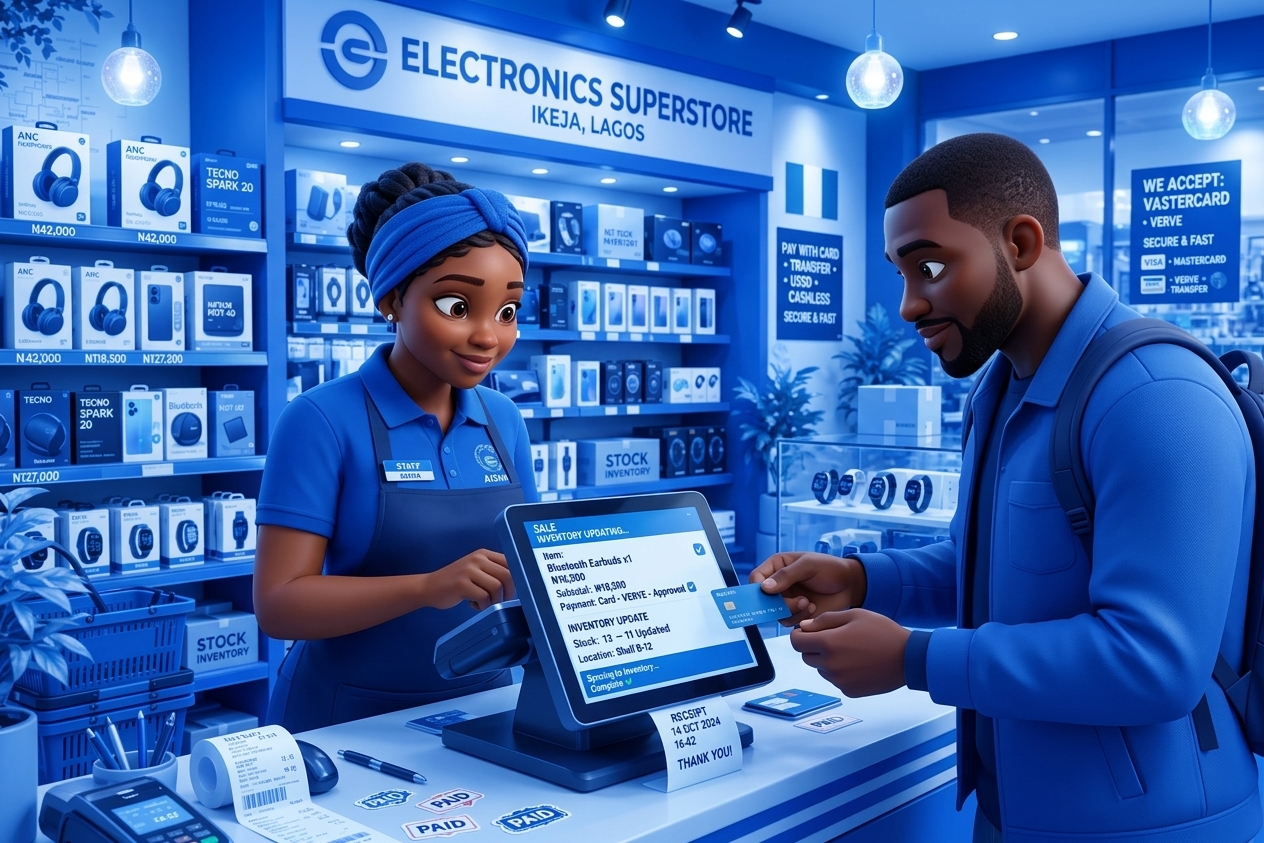
A traditional payment terminal can successfully process a transaction without updating your inventory or customer database.
That creates additional work.
The cashier records the sale. Someone else updates the stock spreadsheet. Another employee reconciles the transaction at the end of the day.
An integrated POS system connects sales transactions to the wider business operation.
When a customer purchases an item, the system should record the transaction and update the relevant inventory information.
Why it matters: Your sales, payment and inventory records become more consistent, reducing repetitive administrative work.
2. Replace Anonymous Paper Receipts with Digital Receipts
Think about how many customers leave physical stores with paper receipts they eventually discard.
Those transactions contain useful information, but the business often has no convenient way to use it again.
Digital receipts can provide customers with accessible purchase records while helping retailers organise transaction histories.
With appropriate customer consent, businesses can also use the information to provide warranty support, order updates and relevant product recommendations.
Why it matters: A completed sale can become the beginning of a longer customer relationship.
3. Synchronise Inventory Across Every Branch and Online Store
Imagine Funke has three showrooms.
A customer visits the Lekki branch and purchases the last available dining table.
However, the website still displays the item as available.
Another customer places an online order and pays for the same product.
Now the business has two customers expecting one item.
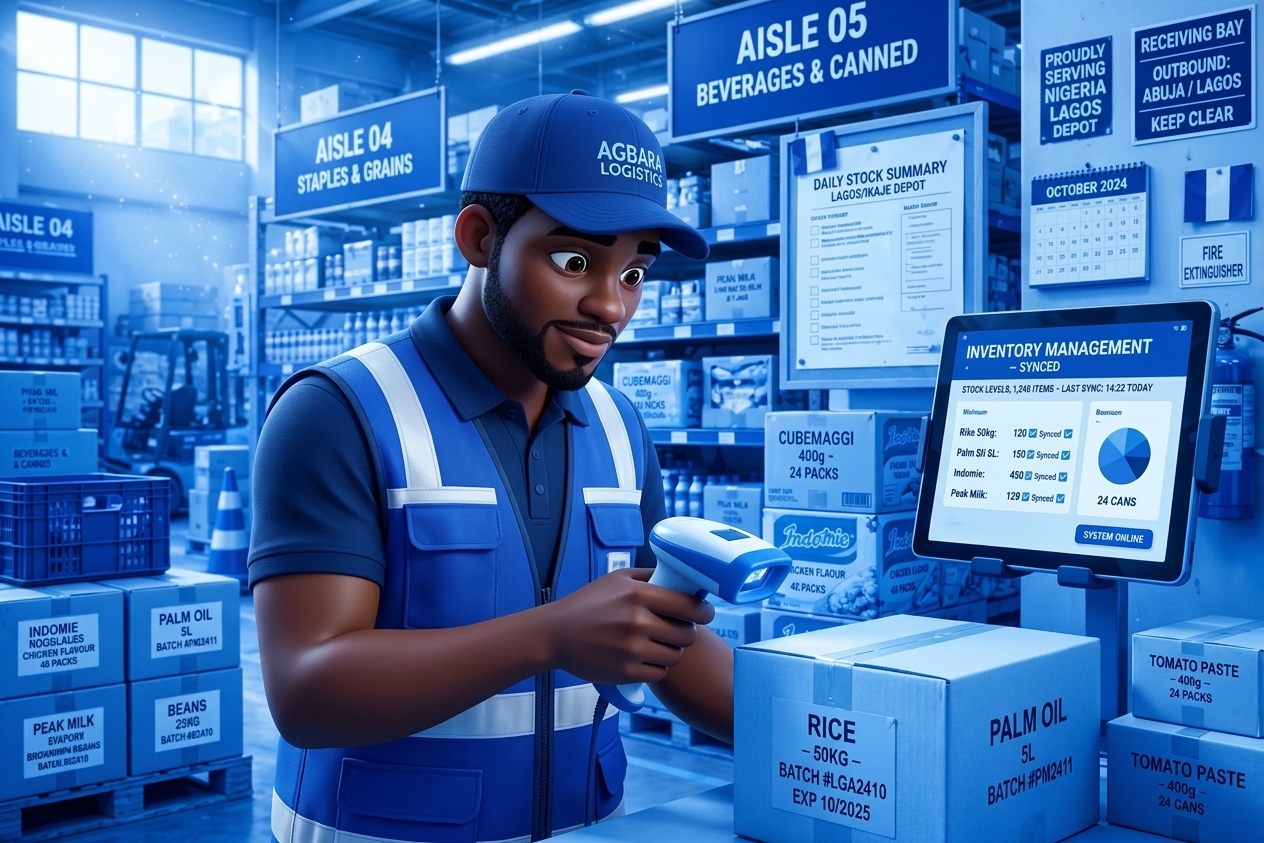
This problem can be reduced through centralised inventory management.
When a product is sold in one location, the available stock should update across connected branches and digital storefronts.
Why it matters: Accurate stock information reduces overselling, unnecessary cancellations and customer disappointment.
4. Introduce Scan-in-Store, Deliver-to-Home Shopping
Some products are simply too large to take home immediately.
Furniture, refrigerators, washing machines and other appliances often require scheduled delivery.
Rather than treating the showroom as a place where customers must physically collect everything, retailers can use it as a product discovery and experience centre.
Sales representatives can help customers explore products, select colours and specifications, and complete purchases for home delivery.
The customer gets the benefit of seeing the product physically without the inconvenience of transporting it.
Why it matters: Your showroom becomes a sales channel for both immediate purchases and future deliveries.
5. Introduce Buy Online, Pick Up In Store (BOPIS)
Not every customer wants home delivery.
Some shoppers prefer to order online and collect their purchases from a nearby branch.
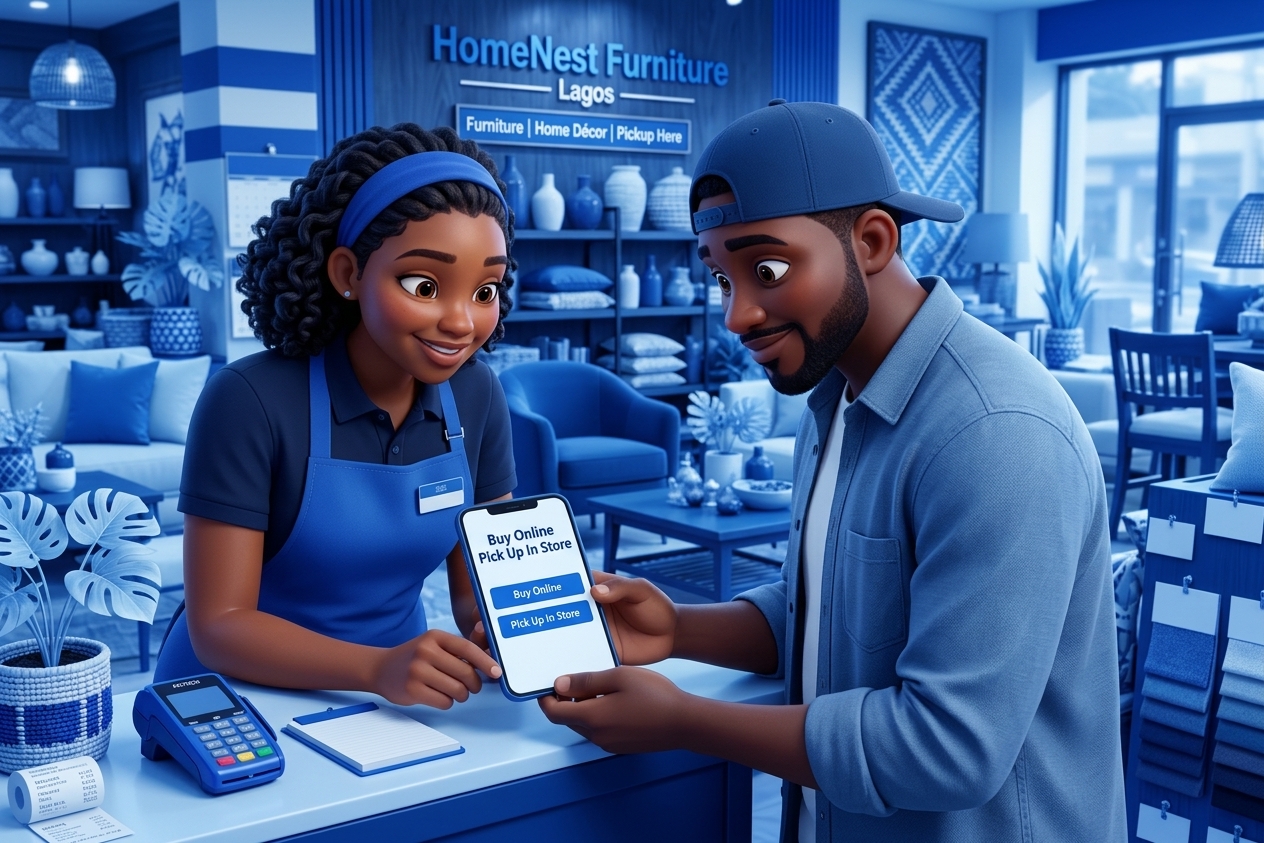
A Buy Online, Pick Up In Store option gives customers that flexibility.
Once an order is placed, the relevant branch receives a notification and prepares the product for collection.
This can also create opportunities for additional purchases when customers arrive at the store.
Why it matters: Customers can choose the fulfilment method that suits them while your branches become more useful to online shoppers.
6. Synchronise Prices and Promotions Across All Channels
Imagine a customer sees a discounted refrigerator on your website but visits your showroom to discover that the price is different.
The experience creates confusion and damages trust.
A centralised pricing system helps retailers maintain consistent product prices and promotional information across their physical and digital channels.
When a promotion is approved, the updated price can be reflected across connected sales platforms.
Why it matters: Consistent pricing reduces customer confusion and helps employees communicate offers accurately.
7. Use Purchase History to Encourage Repeat Purchases
A customer purchases a coffee machine today.
A few weeks later, that customer may need coffee supplies, cleaning products or compatible accessories.
Without an organised purchase history, the retailer may never recognise the opportunity.
A connected POS and customer management system can help businesses understand previous purchases and provide relevant follow-up recommendations.
For example, a retailer could send a consent-based WhatsApp message informing the customer about compatible accessories or a new product arrival.
Why it matters: Repeat purchases become easier to encourage when businesses understand what customers have already bought.
8. Connect Loyalty Rewards Across Physical and Online Stores
Customers should not have to maintain separate loyalty accounts for the same business.
If a shopper earns loyalty points at a physical showroom, those points should ideally be available when shopping online too.
A unified loyalty system can connect customer accounts across sales channels.
Customers can earn rewards in-store and redeem them online, or vice versa, depending on the programme's rules.
Why it matters: A consistent loyalty experience gives customers more reasons to return, regardless of where they shop.
9. Automate End-of-Day Payment Reconciliation
At the end of a busy trading day, the finance team may need to compare cash sales, card transactions, bank transfers and POS settlement reports.
Doing this manually across several branches takes time and creates room for mistakes.
A connected financial and POS system can help organise transaction records and match them against relevant payment settlements.
Discrepancies can then be flagged for investigation.
Why it matters: Finance teams spend less time searching for missing figures and more time reviewing the business's financial performance.
10. Turn Sales Representatives into Digital Sales Partners
One common concern among physical retail employees is that online sales might reduce their commissions.
Retailers can address this by connecting digital sales to the employees who helped generate them.
For example, a sales representative could share a unique product link or QR code with a showroom visitor.
If the customer decides to purchase later through that link, the system can attribute the sale to the relevant representative, subject to the company's commission policy.
Why it matters: Your employees become partners in digital growth rather than seeing the online store as competition.
What a Connected Retail Business Looks Like
The difference becomes clearer when we compare disconnected retail operations with an integrated approach.
| Business activity | Disconnected retail | Connected omnichannel retail |
|---|---|---|
| Payments | Separate payment records | Integrated sales and payment records |
| Receipts | Paper-based records | Digital transaction history |
| Inventory | Independently updated spreadsheets | Centralised stock visibility |
| Online orders | Manually checked against showroom stock | Connected order and inventory workflows |
| Promotions | Updated separately | Centralised pricing management |
| Customer relationships | Limited to individual visits | Organised customer records |
| Loyalty | Separate physical and online rewards | Unified loyalty programme |
| Reconciliation | Manual comparisons | Automated matching and discrepancy reporting |
The objective is not to eliminate physical retail.
It is to make physical retail more valuable by connecting it to the opportunities available online.
How Ofia Helps Bring Your Retail Operations Together
Funke's business does not need to choose between its physical showrooms and digital storefront.
It needs a system that allows both to operate together.
This is where Ofia POS Terminal & Enterprise ERP comes in.
Ofia is positioned to help established retailers organise their physical and digital operations through connected business infrastructure.
Depending on the configured modules, retailers can use the platform to support:
- Integrated POS operations: Organise transactions and sales records across physical locations.
- Inventory management: Maintain more consistent stock information across branches and online channels.
- Digital storefronts: Give customers an additional way to browse and purchase products.
- Customer records: Organise purchase information and support customer relationship management.
- Financial operations: Improve transaction tracking and payment reconciliation.
- Omnichannel commerce: Connect physical shopping with digital ordering and customer engagement.
Instead of managing separate systems that rarely communicate, businesses can work towards a more unified operational environment.
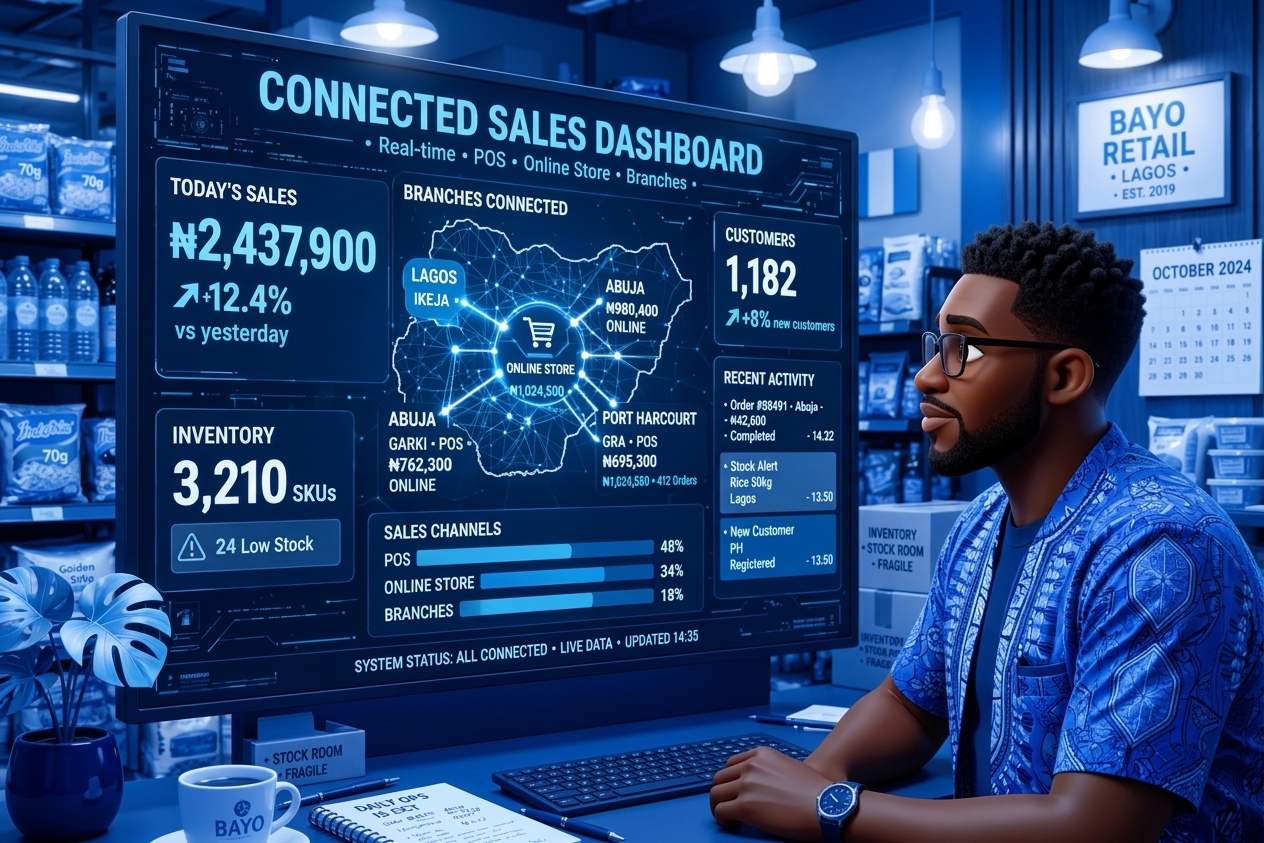
For a multi-branch retailer, this means having a clearer view of sales, stock and customer activity across the business.
And for the customer, it means a more consistent shopping experience.
Your Showroom Should Be More Than a Place Where Transactions End
Funke eventually understands that her showroom is not the problem.
The problem is what happens after customers walk through the door.
Some customers want to browse online before visiting. Others prefer to inspect products physically before ordering from home. Some purchase immediately but return weeks later for accessories or additional products.
A modern retailer needs to accommodate all these behaviours.
A physical store should create opportunities for digital sales, just as an online store should support physical showroom activity.
The strongest retail businesses will not necessarily be those with the biggest showrooms or the most impressive websites. They will be the businesses that connect both experiences effectively.
Ready to Connect Your Physical and Digital Stores?
If your business operates multiple branches, processes large volumes of transactions or manages a showroom alongside an online store, it may be time to rethink how your systems work together.
With Ofia POS Terminal & Enterprise ERP, you can explore a more connected approach to retail operations, inventory management and digital commerce.
Don't let your customers disappear after they leave your showroom.
Turn every physical interaction into an opportunity for a lasting digital customer relationship.
Explore Ofia's Retail and Enterprise Solutions
Your showroom brings customers in. Your connected retail system gives them reasons to come back.