
What happens when your last item sells in the shop, but a customer orders it online?
Imagine you own a clothing store in Lagos.
A customer walks in, picks the last available pair of black shoes in Size 40 and pays at the counter. Your cashier records the sale in the store's POS system.
A few minutes later, another customer visits your website, sees the same shoes listed as available and places an order.
Now you have two customers who believe they have bought the same item.
The problem is not necessarily that you have too many orders. It is that your physical shop and online store are working with different versions of your inventory.
This is one of the biggest operational challenges facing retailers who sell through multiple channels. A physical shop, website, social media storefront and delivery operation may all serve the same business, but when their records do not communicate, staff end up updating spreadsheets, checking shelves manually and apologising to customers.
The solution is not simply to sell on more platforms. It is to build one reliable inventory process that connects every sales channel.
For a Nigerian retailer, this matters as shopping increasingly combines physical convenience with digital access. Euromonitor's July 2026 review of Nigerian retail highlights the growing role of digitalisation and omnichannel integration in the sector. The opportunity is there, but retailers need the operational structure to support it.
Here are four developments that help explain the shift, followed by ten practical ways to bring your operations together.
Four developments every modern retailer should understand
1. Nigerian retail is becoming more connected
Euromonitor's July 2026 review of Nigerian retail describes a market shaped by digital engagement, changing consumer expectations and the expansion of retail formats. It also identifies digitalisation and omnichannel integration as important forces influencing the sector.
Why it matters: Customers may discover a product online, inspect it in a showroom and complete their purchase through another channel. Retailers need inventory records that can support that journey rather than treating every channel as a separate business.
Read Euromonitor's Retail in Nigeria report
2. Online retail is growing, making stock accuracy more important
Euromonitor's July 2026 report on Nigerian retail e-commerce describes strong expansion in online retail sales during 2025. As more purchases move through digital channels, inaccurate product availability can create a frustrating experience for customers and additional work for merchants.
Why it matters: An online catalogue must reflect what the business can actually fulfil. More digital orders make accurate stock records and dependable order processing increasingly important.
Read Euromonitor's Retail E-Commerce in Nigeria report
3. Customers use different payment channels, so payment records must be clear
The Central Bank of Nigeria's payment information shows the importance of electronic payment channels, including web transfers, POS and mobile payments. Paystack's September 2026 guidance also explains how Nigerian businesses can accept bank transfers through its Pay with Transfer service, with transaction confirmation reflected on the merchant dashboard.
Why it matters: A retailer may receive cash at the counter, card payments through a terminal and transfers for online orders. These transactions need to be recorded against the correct sales so that payment reconciliation does not become another manual exercise.
Read the CBN's payment modes overview · See Paystack's Pay with Transfer guidance
4. Customer information needs responsible handling
The Nigeria Data Protection Commission's published privacy guidance explains that individuals have rights concerning how their personal information is collected and processed. Its guidance also identifies consent as important in circumstances such as direct marketing.
Why it matters: Connecting customer records across physical and digital sales can improve service, but retailers should collect only the information they need, explain how it will be used and respect customers' privacy choices.
Read the NDPC's Data Privacy Policy
These developments point to one practical conclusion: a modern retail business needs more than a physical cash register and an online product catalogue. It needs a dependable way to keep stock, sales, payments and customer records organised across the business.
10 operational fixes for a synchronized retail system
1. Connect physical checkout to central inventory
Start with the point where stock changes most frequently: the checkout counter.
When a cashier sells an item, that sale should update the business's central inventory record. The same stock information should then be used by the online store and other connected sales channels.
This reduces the need for someone to remember to update a separate spreadsheet after every transaction.
A cloud-connected POS system can support this process, provided the POS and inventory platform are properly integrated.
2. Use consistent product codes and barcode scanning
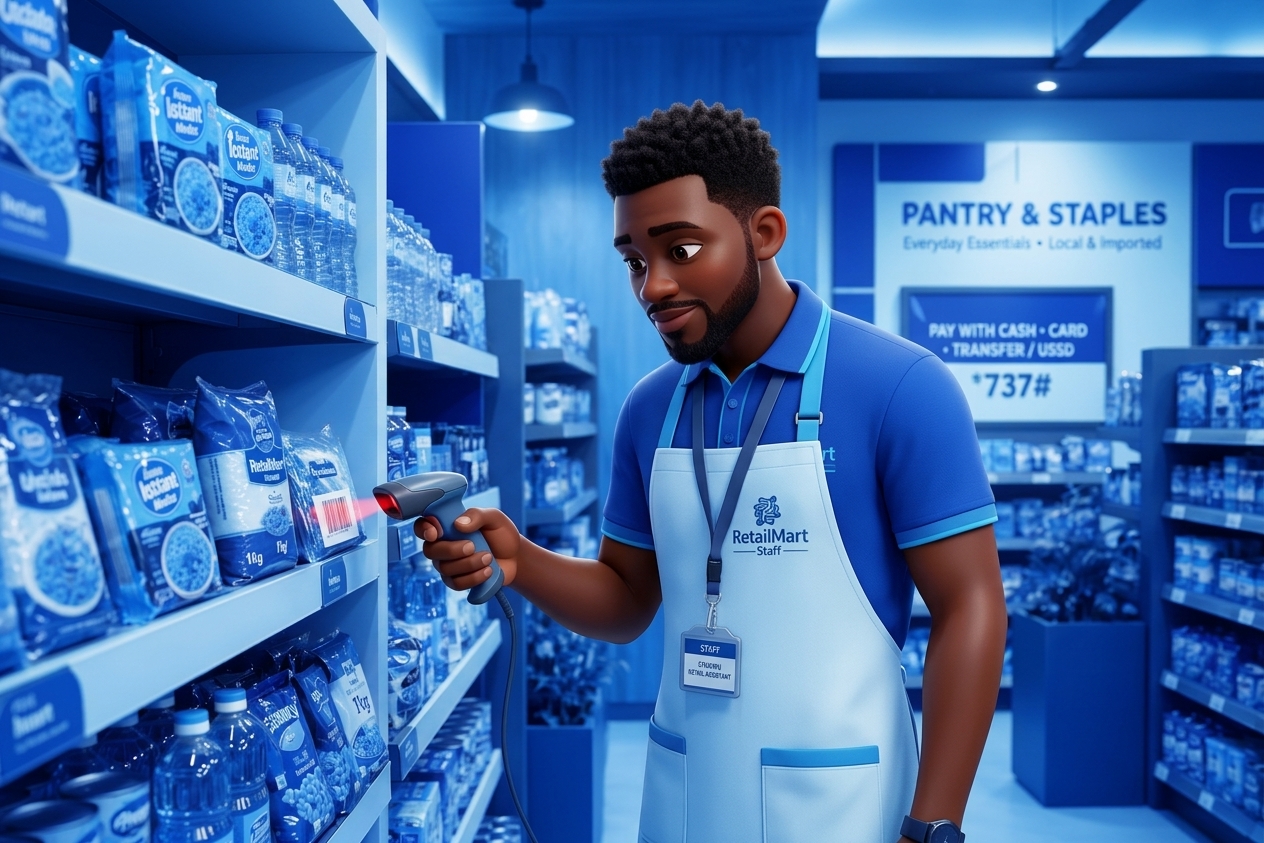
A product should have one identifiable record across your store, warehouse and online catalogue.
For example, a boutique selling the same shirt in three sizes and four colours should be able to distinguish each size-and-colour combination.
Standardised product codes and barcode scanning help staff identify the correct item when:
- Receiving new stock.
- Recording a physical sale.
- Picking an online order.
- Processing a return.
- Moving products between branches.
The goal is simple: the product being scanned should match the product recorded in the system.
Image placement: A retail assistant scanning a product barcode on a shelf in a modern Nigerian store. Use a realistic editorial photograph with warm lighting and subtle emerald-green accents.
3. Make online reservations and in-store collection easier

Not every online customer wants home delivery.
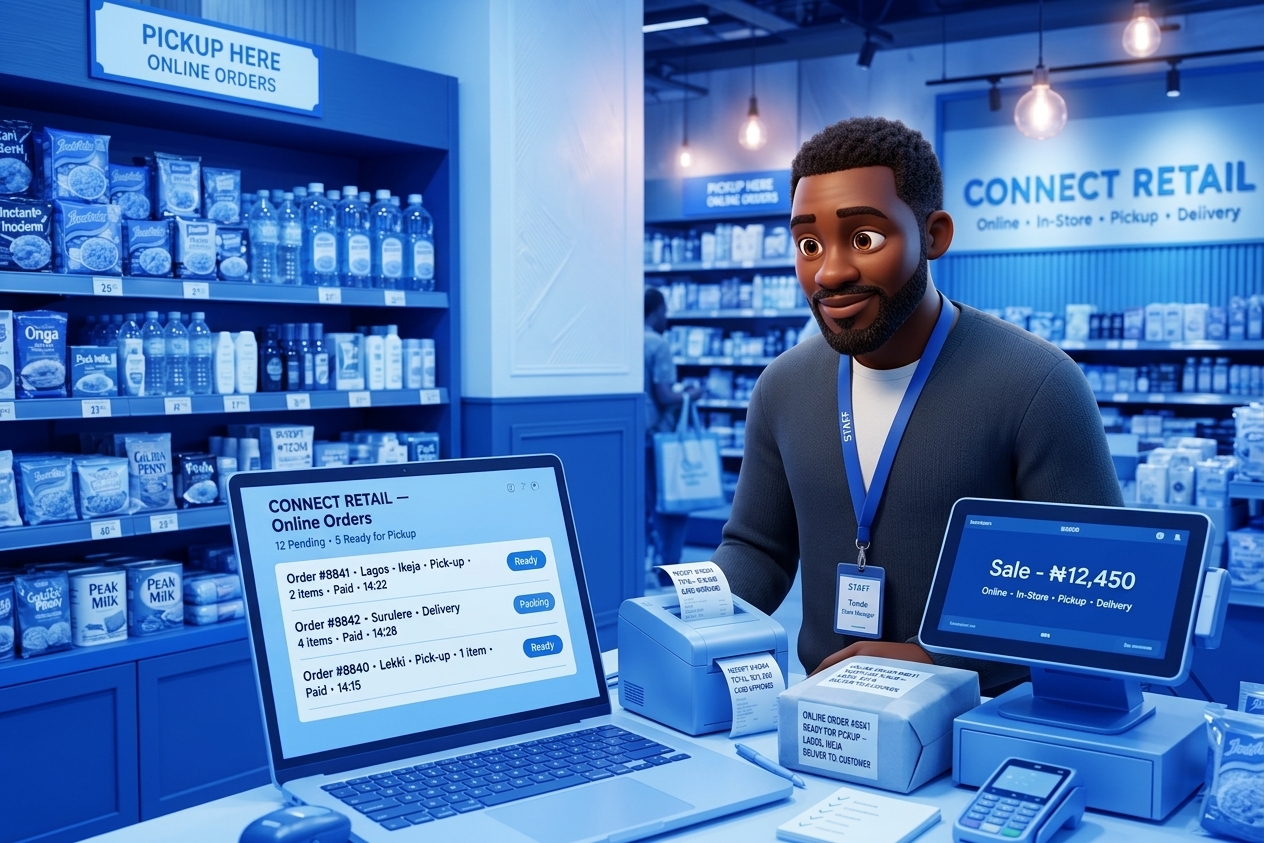
Some customers would rather pay online and collect their order from a nearby branch. This is commonly known as Buy Online, Pick Up In-Store (BOPIS), or click and collect.
To support it properly, the retailer needs a clear process:
- The customer selects an available product online.
- The order is recorded against the relevant store.
- Staff confirm and prepare the item.
- The customer receives collection instructions.
- Staff confirm that the order has been handed over.
Do not promise a collection time until the branch has confirmed that it can fulfil the order.
4. Record every payment against the correct sale
A customer may pay with cash, a POS terminal, a bank transfer or another supported payment method.
The important thing is not to force every customer to use one payment channel. It is to ensure that each payment is properly recorded against the transaction.
Your checkout process should help staff identify:
- The amount expected.
- The payment method used.
- Whether payment has been confirmed.
- The transaction reference, where applicable.
- Whether the sale is completed or still pending.
For bank transfers, staff should rely on verified transaction confirmation rather than a customer's screenshot or verbal assurance alone.
5. Let staff order products from other branches
A customer visits your showroom looking for a particular product, but the item is unavailable at that location.
That does not always have to mean a lost sale.
If another branch or central warehouse has the item, staff should be able to check its availability and arrange fulfilment from the appropriate location.
For example, a customer at your Owerri branch may need a product that is currently available at your warehouse or another branch.
A connected inventory system makes it easier to check stock across locations before promising the customer anything.
6. Keep prices and promotions consistent
Imagine a customer sees a shirt advertised online for ₦18,000 but arrives at your physical store and finds it marked at ₦20,000.
Even if the difference is accidental, it can damage trust.
Retailers should maintain a central product and pricing record so that authorised price changes and promotions can be reflected across connected channels.
Before launching a promotion, confirm:
- Which products are included.
- The correct selling price.
- The start and end dates.
- Whether the offer applies to every branch.
- Whether online and in-store customers are eligible.
A shared pricing process reduces confusion for both staff and customers.
7. Connect sales records to accounting
Inventory tells you what you have. Sales records tell you what has been sold. Accounting helps you understand what happened financially.
These records should work together.
When a sale is completed, the business should be able to trace the transaction through its sales and accounting records. The accounting setup should also distinguish between cash, card, transfer and other payment channels.
This makes it easier to review daily sales, compare expected and received payments, and identify transactions that need attention.
Where a system offers accounting integration, confirm exactly which entries it creates and whether the setup reflects your accountant's approved chart of accounts.
8. Choose the right branch for order fulfilment
For businesses with multiple locations, an online order does not always have to be fulfilled from one central warehouse.
A retailer may choose to fulfil an order from the branch with available stock that can serve the customer efficiently.
However, the nearest branch is not automatically the best choice. Staff should also consider:
- Whether the item is physically available.
- Whether the stock is already reserved for another order.
- Whether the branch can prepare the order.
- Delivery cost and estimated travel time.
- Whether another location can fulfil it more reliably.
A good fulfilment process balances convenience with actual stock availability.
9. Maintain useful customer records across sales channels
A customer may buy a product in-store today and return to your website next month.
Keeping organised customer records can help your team provide more consistent service across those interactions.
For example, a customer who has purchased a particular appliance may later need help with a warranty enquiry or a compatible accessory.
Where appropriate, your business can maintain customer contact details, transaction history and service records in one organised system.
But customer information must be handled responsibly. Explain why information is collected, protect it and obtain the appropriate permission before using it for direct marketing.
A connected customer record should improve service, not become an excuse to send unwanted messages.
10. Monitor stock movement between branches
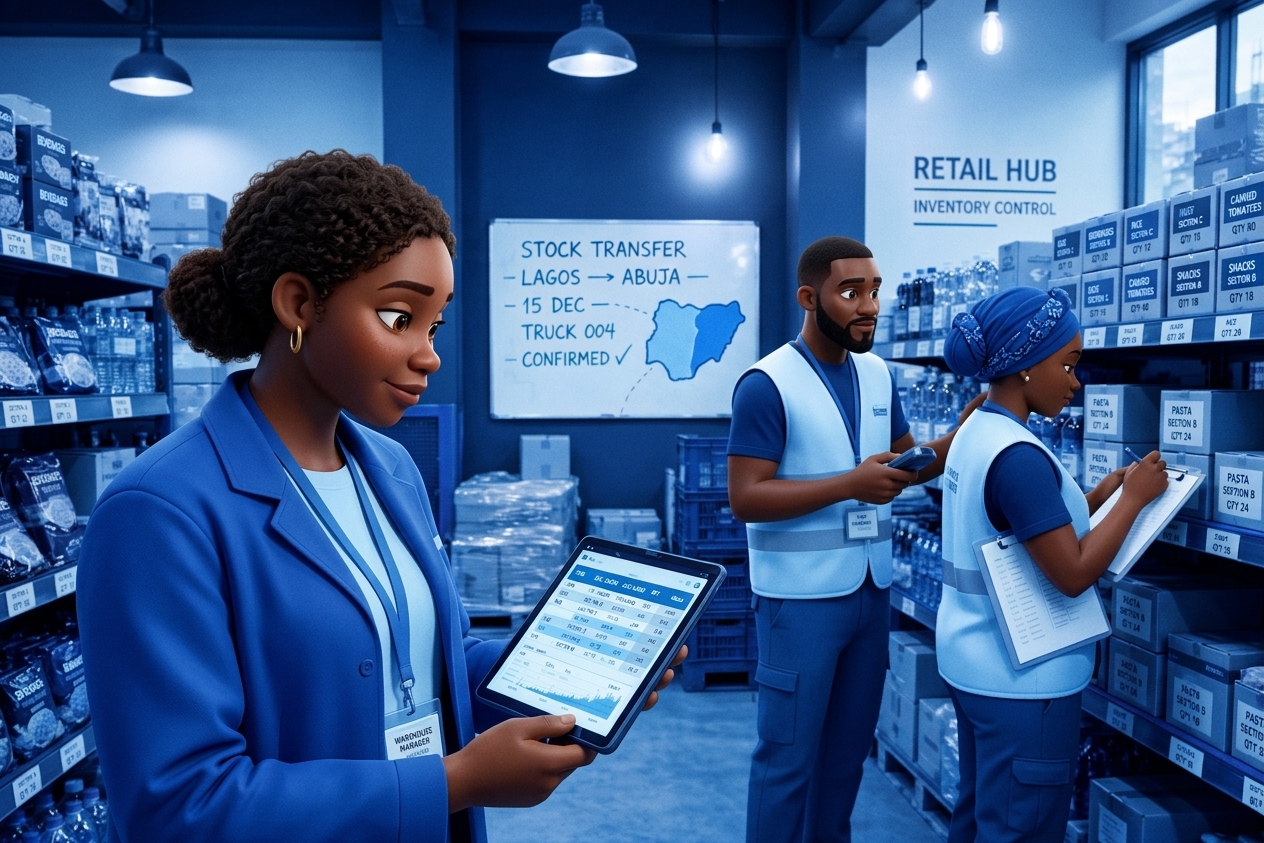
A product may sell quickly at one branch while remaining on the shelves at another.
Without a clear view of stock across locations, one branch can run out while another holds more than it needs.
Set up a regular process for monitoring:
- Fast-moving products.
- Slow-moving products.
- Low-stock items.
- Overstocked branches.
- Pending inter-branch transfers.
- Stock discrepancies.
When the system identifies a possible shortage, managers can review whether a transfer or replenishment is necessary.
Automated transfer suggestions can help where supported, but staff should still confirm the physical quantity and authorise movements according to the business's procedures.
Image placement: A warehouse or store manager reviewing stock levels on a tablet while staff organise labelled shelves. Maintain the same warm, realistic editorial style as the barcode-scanning image.
What changes when your physical and digital operations work together?
The difference is not simply that you have more technology. It is that your team spends less time trying to reconcile separate records and more time serving customers.
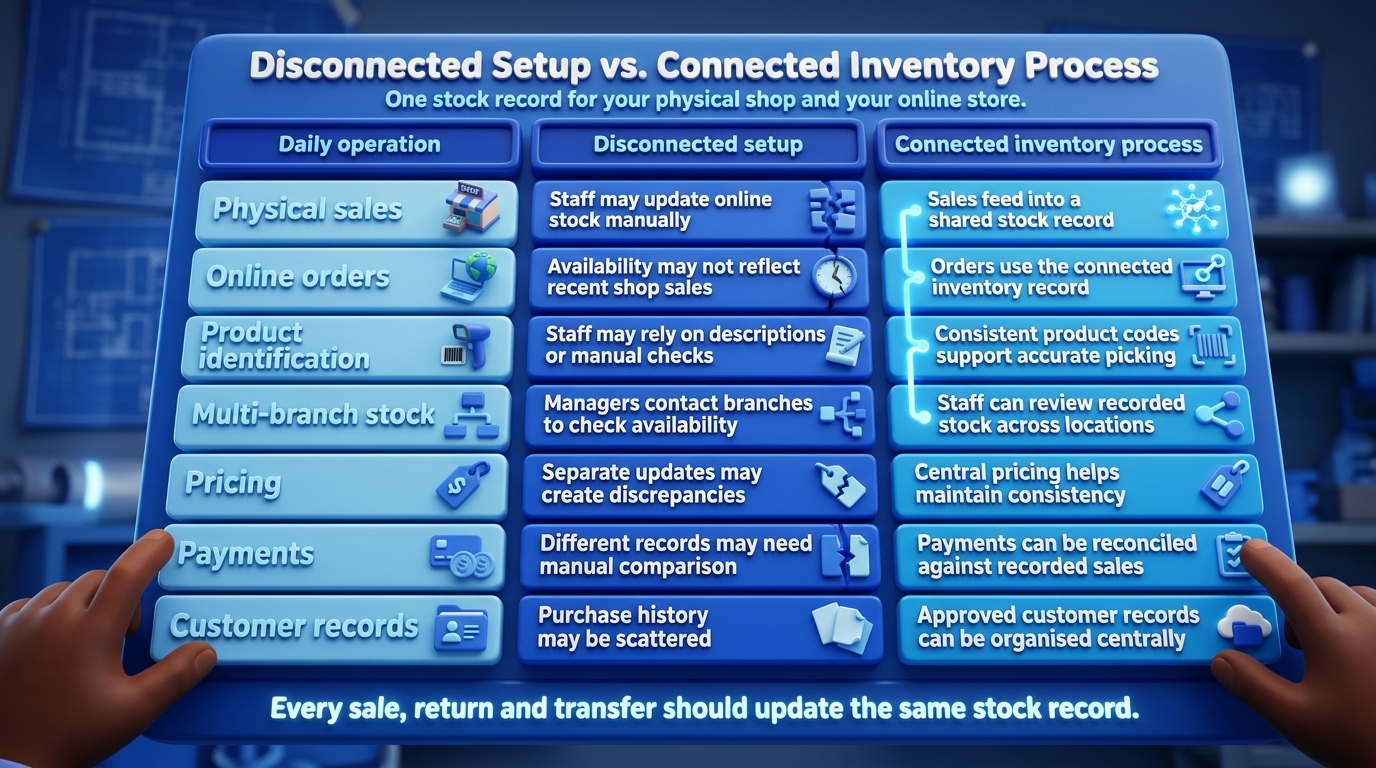
The actual results depend on the quality of the integration, the accuracy of stock entries and how consistently staff follow the process. A connected system cannot correct inaccurate records if employees do not record sales, returns and transfers properly.
Stop managing two versions of the same business
Your physical shop and digital storefront may look like different sales channels, but they are serving the same business and selling from the same pool of products.
When each channel maintains a separate stock record, small mistakes can become expensive problems: cancelled orders, disappointed customers, misplaced products and hours spent reconciling records.
The goal is not to make every retail process complicated. It is to make the important information available in one dependable place.
The key takeaway: Every sale, return, transfer and fulfilled order should contribute to an accurate picture of what your business actually has in stock.
Upgrade your retail operations with Ofia
Ofia is positioned to help businesses organise their retail and commerce operations through its product ecosystem. If you are considering Ofia for your physical and digital retail setup, ask for a demonstration of the specific POS, inventory, branch-management and accounting workflows your business needs.
Explore Ofia's waitlist and discuss how a more connected retail operation could work for your business.