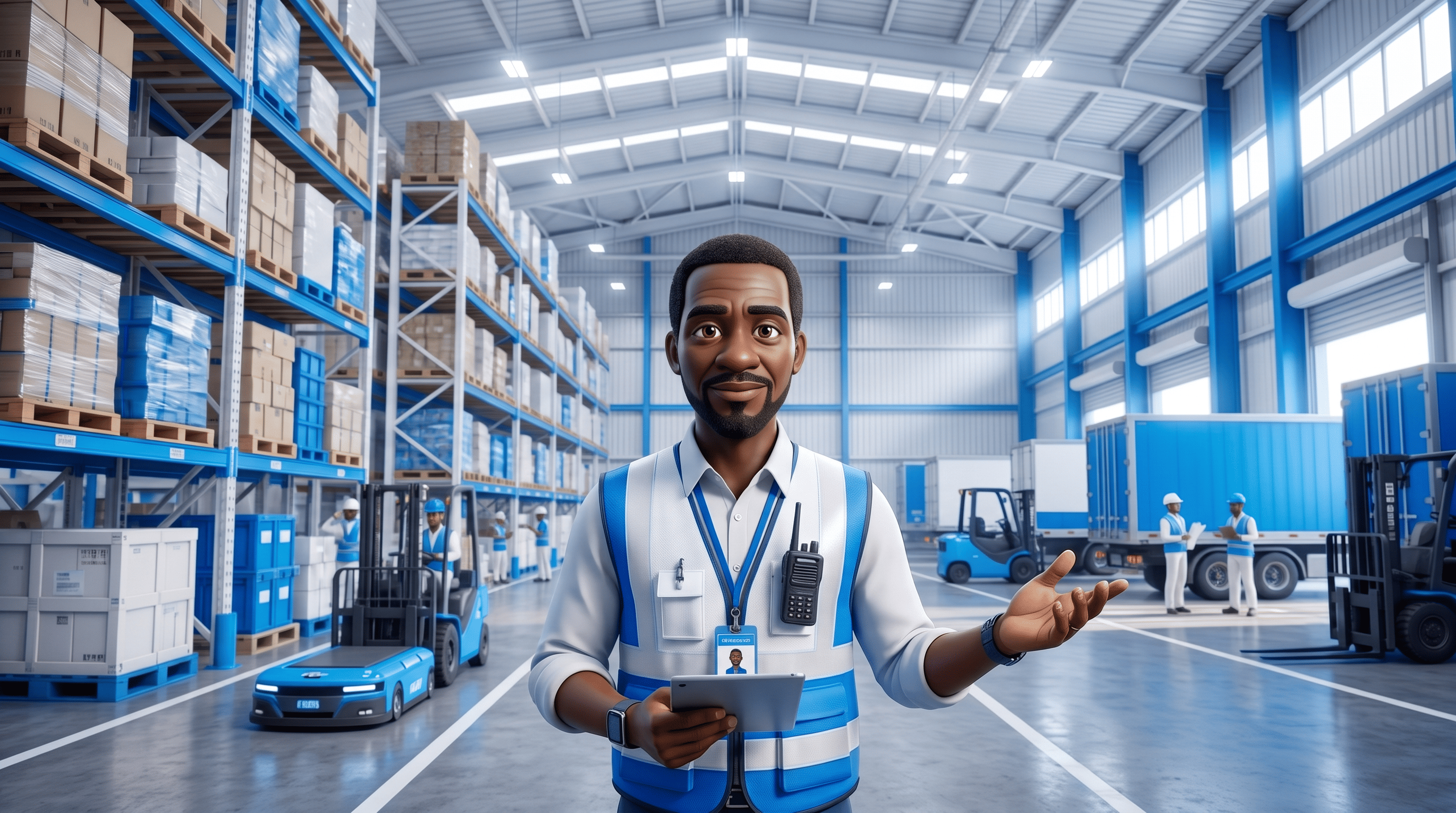


Your business is receiving bigger orders, but can your paperwork, warehouse and delivery operations keep up?
When Business Growth Starts Creating Operational Problems
Imagine Bayo, a wholesale distributor who has spent years building a successful supply business.
His company supplies FMCG products to retailers, distributes building materials and manages several delivery trucks.
Business is growing. Orders are increasing, new customers are coming in, and the company is beginning to serve more locations.
But behind the growth, something is going wrong.
A customer requests a quotation for 500 cartons of products. The sales representative has to call the warehouse supervisor to confirm availability.
The warehouse supervisor checks a physical stock ledger.
The transport manager calculates delivery costs separately.
The accountant prepares a pro-forma invoice.
By the time everyone has confirmed the details, the customer has been waiting for hours.
Meanwhile, another customer has placed an order for products that are already out of stock.
A driver has left the depot with a paper waybill, but the office has no immediate confirmation that the delivery has been completed.
Bayo is selling more, but managing the business is becoming harder.
This is the operational challenge facing many wholesale and logistics businesses.
The problem isn't always the volume of business. Sometimes, it's the inability of existing systems to manage that volume efficiently.
The Distribution Industry Is Already Moving Beyond Paper
Bayo's situation is not happening in isolation. Across Nigeria, developments in the FMCG and logistics industries show a growing interest in digital distribution, better inventory visibility and connected supply chain operations.
Four developments help explain why this transition matters.
1. Nigeria's FMCG Distribution Network Is Moving Towards Digital Operations
In May 2026, OmniBiz Africa unveiled OmniOne, a digital platform designed to modernise traditional trade and FMCG distribution in Nigeria.
The initiative addresses familiar problems within the distribution sector, including fragmented supply chains, limited access to financing and dependence on manual inventory and ordering processes.
Why does this matter to Bayo?
Because distributors are increasingly competing on how efficiently they can connect suppliers, warehouses and retailers, not simply on how many products they can sell.
2. Fragmented Distribution Is Increasing the Cost of Doing Business
A BusinessDay report published on October 16, 2026, examined how multiple markups, unpredictable wholesale prices and stock-outs are affecting Nigerian informal retailers.
The report highlighted the difficulties businesses face when they source products through several distributors and wholesalers, make repeated calls and struggle to maintain adequate stock.
It also discussed City Distro's efforts to connect manufacturers and retailers through a more coordinated ordering and fulfilment platform.
For Bayo, the lesson is important: when ordering, inventory and fulfilment information are disconnected, businesses lose time and customers face unnecessary purchasing difficulties.
3. Nigeria Is Taking Steps Towards Electronic Cargo Tracking
In July 2026, the Nigeria Customs Service held a stakeholder sensitisation workshop on the Electronic Cargo Tracking System at the Port and Terminal Multiservices Limited Area Command.
The initiative forms part of efforts to improve cargo tracking and monitoring.
This development matters because logistics businesses need reliable information about goods as they move through the supply chain. Knowing what has been dispatched, where it is and when it reaches its destination is essential to operational accountability.
For private distributors, the same principle applies to their everyday deliveries: paper records should not be the only way to establish what happened to an order.
4. Electronic Trade Documentation Is Becoming More Important
In March 2026, DHL, the Standards Organisation of Nigeria and other stakeholders began electronic transmission of cargo manifests through Nigeria's National Single Window platform.
The initiative is designed to simplify trade documentation and improve information exchange between relevant border agencies and logistics operators.
This is another indication that digital documentation is becoming increasingly important in commercial logistics.
For wholesale distributors, the opportunity is to bring the same thinking into everyday operations: quotations, invoices, dispatch records and delivery confirmations should be accessible without searching through piles of paperwork.
What These Developments Mean for Wholesale Distributors
Consider what all four developments have in common.
They point towards a supply chain where information needs to move as efficiently as the goods themselves.
A warehouse may contain thousands of cartons, but if management cannot accurately see what is available, that information is not useful enough.
A fleet may have dozens of trucks, but if dispatch records are disconnected from delivery confirmation, managing those vehicles becomes unnecessarily difficult.
A distributor may have hundreds of customers, but if every quotation requires manual calculations, the sales team will eventually struggle to keep up.
The answer is not simply to employ more administrative staff or purchase additional trucks.
It is to improve the systems connecting the different parts of the business.
Here are five practical ways to begin.
Five Operational Fixes for Wholesale Businesses
1. Replace Manual Price Lists with Digital B2B Quotation Systems
Wholesale customers rarely purchase at exactly the same price.
A large institutional buyer may receive different pricing from a small retailer. A sub-distributor purchasing in bulk may qualify for a different discount.
When these arrangements exist only in spreadsheets, paper documents or the memory of sales executives, preparing quotations becomes unnecessarily complicated.
A digital B2B ordering system can organise customer-specific pricing and volume discounts.
Customers can access their applicable prices, view products and prepare orders without waiting for repeated manual calculations.
Why it matters: Faster quotations help sales teams respond to customers more efficiently and reduce unnecessary delays in the purchasing process.
2. Replace Physical Stock Cards with Real-Time Inventory Management
Imagine Bayo's company has three warehouses.
One is in Lagos, another in Kano and the third serves a different distribution corridor.
A customer requests 200 cartons of a product.
The Lagos warehouse appears to have enough stock in its ledger, but some of those cartons have already been allocated to another order.
This creates confusion and potentially leads to overselling.
A centralised inventory management system gives management a clearer view of stock across different warehouse locations.
With appropriate barcode scanning and digital stock updates, warehouse teams can record products as they are received, moved, picked or dispatched.
Management can then make decisions using more current inventory information rather than relying entirely on physical records.
Why it matters: Accurate stock visibility helps distributors fulfil orders more confidently and plan replenishment before shortages become serious problems.

Digital inventory tracking gives distributors better visibility across warehouses and helps reduce stock discrepancies.
3. Automate Freight Calculations and Dispatch Planning
For a distributor handling interstate deliveries, transportation costs can change.
Fuel prices, haulage rates, distance, loading costs and other charges all affect the final cost of delivering goods.
When these calculations are handled manually, important costs can be overlooked.
A digital logistics system can help businesses organise freight charges, calculate delivery costs and connect dispatch information to customer orders.
It can also help transport managers coordinate available vehicles and delivery schedules.
Instead of relying entirely on phone calls and whiteboards, the business has a central place to manage dispatch activities.
Why it matters: Better dispatch planning helps protect margins, improve fleet utilisation and reduce avoidable operational confusion.
4. Move from Paper Waybills to Electronic Proof of Delivery
Bayo's driver leaves the warehouse with several customer orders.
The office has a paper waybill showing what was loaded and where it should be delivered.
But what happens when the customer claims the goods never arrived?
What happens when a delivery document gets misplaced?
Without reliable records, resolving the dispute becomes difficult.
Electronic Proof of Delivery (ePOD) systems provide a more organised way to document completed deliveries.
Depending on the system, drivers can capture recipient signatures, photographs, timestamps and location information through a mobile device.
The delivery record can then be made available to relevant members of the business.
Why it matters: Electronic delivery records improve accountability, make delivery disputes easier to investigate and help businesses maintain a more reliable audit trail.
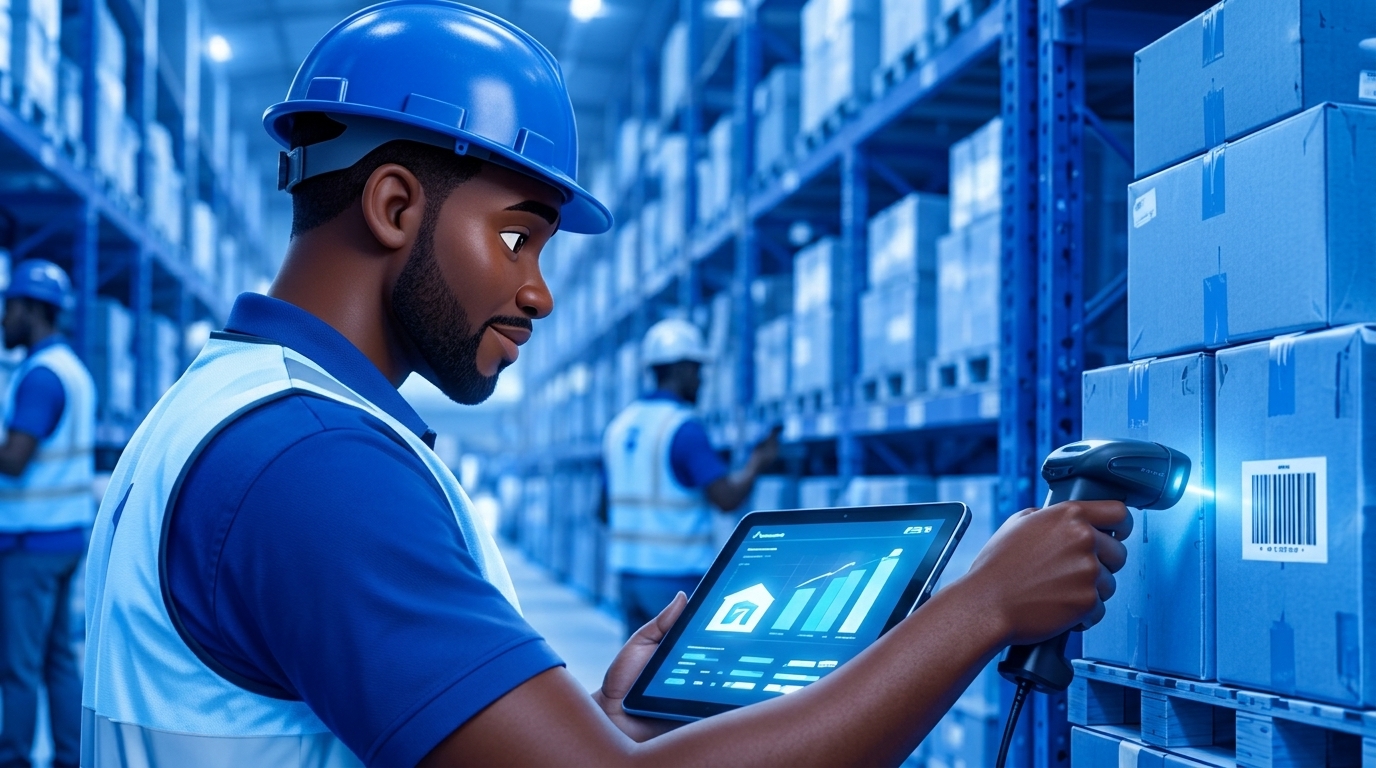
Connecting warehouse operations and dispatch records helps businesses track goods throughout the fulfilment process.
5. Use Operational Dashboards to Make Better Business Decisions
One of the biggest disadvantages of relying on paper records is that management often has to wait for information to be compiled before making decisions.
How quickly are products selling?
Which warehouse has excess stock?
Which products need restocking?
Which delivery routes are costing the business more?
Which customers have outstanding orders?
These questions should not require searching through multiple notebooks and spreadsheets.
A centralised operational dashboard can bring important information together.
By monitoring stock movement, sales activity, outstanding orders and delivery performance, management can identify problems earlier and make more informed decisions.
Why it matters: Better information helps business owners move from reacting to operational problems to planning ahead.
From Paper-Based Operations to a Connected Distribution System
The difference between a manual distribution business and a digitally organised one is not simply the amount of paperwork used.
It is how easily information moves between departments.
| Operational Area | Manual Approach | Digital Approach |
|---|---|---|
| Customer quotations | Manually prepared price lists | Organised B2B pricing and quotation workflows |
| Inventory | Physical bin cards and spreadsheets | Centralised stock management |
| Warehousing | Separate location records | Multi-warehouse inventory visibility |
| Freight calculations | Manual cost calculations | Organised digital freight calculations |
| Dispatch | Phone calls and paper schedules | Centralised dispatch management |
| Delivery confirmation | Physical signatures and paper waybills | Electronic Proof of Delivery |
| Business reporting | Manually compiled reports | Operational dashboards |
The goal is not to remove people from the business.
It is to stop making people spend valuable working hours performing tasks that a well-designed system can organise more efficiently.
How Ofia Can Help Wholesale Businesses Move Forward
Bayo's business does not necessarily need another warehouse or more administrative staff to solve every operational challenge.
It needs a better way to coordinate the operations it already has.
This is where Ofia Inventory IMS & Logistics Command Center comes in.
Designed for enterprise distributors, FMCG suppliers and logistics operators, Ofia provides digital infrastructure to help businesses manage important operational activities.
Depending on the configured modules, businesses can organise:
- B2B marketplace and ordering: Support structured business-to-business purchasing and customer pricing.
- Multi-warehouse inventory: Manage stock information across different warehouse locations.
- Logistics and dispatch: Coordinate deliveries and organise fleet operations.
- Digital delivery records: Improve delivery documentation and accountability.
- Operational management: Bring important business activities into a more organised digital environment.
Instead of allowing quotations, stock records, dispatch information and delivery documents to remain scattered across different departments, businesses can work towards a more connected operational system.

A connected logistics operation makes it easier for warehouse, transport and management teams to work with shared delivery information.
The Next Stage of Wholesale Distribution Is About Better Systems
The wholesale distribution industry is changing.
Customers expect faster responses. Manufacturers want better distribution visibility. Logistics operators need more reliable delivery records. Business owners need accurate information to manage their operations.
A company may have enough trucks, warehouse space and customers to grow significantly.
But if every order still requires several phone calls, every stock check depends on a physical ledger and every delivery must be confirmed through a paper document, growth will continue to create unnecessary pressure.
The real opportunity is to build a business where information moves as efficiently as the products being distributed.
Ready to Move Beyond Paper-Based Operations?
If your distribution business is still struggling with manual quotations, disconnected inventory records and difficult dispatch coordination, it may be time to rethink your operational systems.
Ofia Inventory IMS & Logistics Command Center helps businesses move towards more organised inventory management, B2B commerce and logistics operations.
Don't just expand your warehouse. Improve the system that runs it.
👉 Explore Ofia Inventory IMS & Logistics Command Center
Move your operations forward. Build a supply chain that is ready to scale.